|
Chronological List of District Heating
Systems in the United States |
|
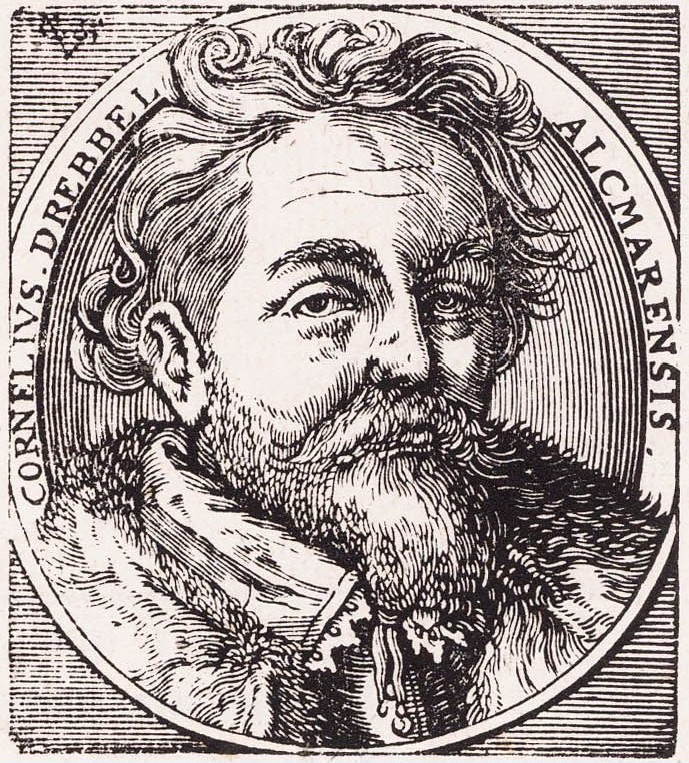
| Cornelius Drebbel |
In 1623, Drebbel made a proposal that since water had now been brought into London and was distributed to individual houses by means of pipes, a similar system could be adopted for the supply of heat.
References
1922 Cornelis Drebbel en zijne tijdgenooten, by Prof. Dr. F. M. Jaeger
(1922)
Pages 123-135: Cornelius
Drebbel French manuscript from N. C. F. de Peiresc, September 1624
(English Translation)
1958 "Cornelis
Drebbel: A Neglected Genius of Seventeenth Century Technology,"
by Lawrence Ernest Harris, Transactions of the Newcomen Society
31:195-204 (1957-1959)
Page 202: Turning from the practical to what might be termed the
fantastic side of Drebbel, there is a further description in the writings
of de Peiresc in 1624 of a scheme which, he says, Drebbel had put forward
to Charles, Prince of Wales (Henry, his elder brother, had died in 1612).
This was a scheme by which heat would be distributed to the houses of
London in a manner similar to that by which water was so distributed. The
latter was a reference to the newly-completed New River Scheme. According
to de Peiresc, reporting what had been told him by Abraham Kuffler,
Drebbel proposed to have a perpetual source of heat on a small hill in the
neighbourhood of London. Here he would instal instruments to collect the
rays of the sun and use them to set on fire a special substance which
would burn and glow without being consumed. The instruments to collect the
rays of the sun were to comprise sets of concave and convex mirrors; the
heat, presumably, would be conveyed to London in pipes in the form of hot
water. The whole scheme sounds somewhat impracticable, but Archimedes was
credited with setting the Roman ships on fire by burning glasses or
concave mirrors, and Drebbel may have had this in mind. What the
indestructible substance may have been it is impossible to say. It
may have been an exaggeration in the minds of Kuffler and de Peiresc, but,
whatever were the details of the proposal, it can be claimed as the first
potential district heating scheme for the city of London. Unfortunately
Drebbel required £20,000 for the scheme and this was not forthcoming.
1961 The
Two Netherlanders: Humphrey Bradley and Cornelis Drebbel, by
Lawrence Ernest Harris
Pages
189-191: Drebbel made the proposal that since water had now
been brought into London and was distributed to individual houses by means
of pipes, a similar system could be adopted for the supply of heat.
1995 "The
road to Lockport: Historical background of district heating and cooling,"
by Morris A. Pierce, ASHRAE Transactions 101:885-892, Part
1; PB: 1517
Page 886: All of this information was available by the early seventeenth
century and almost certainly was used by Cornelis Drebbel in proposing a
district heating system for London. The City of London had depended on
coal since consuming its accessible forests for fuel and timber during the
reign of Elizabeth I, who herself had to live “greatly grieved and annoyed
with the taste and smoke of coal.” Attempts to outlaw coal burning in
London dated back to 1306, but despite numerous fines and imprisonments,
the lack of alternatives forced increased dependence on this noxious but
plentiful fuel. Smoke was exacerbated by periods of cold weather, which,
before accurate thermometers, was measured by the freezing over of the
Thames. During the bitter winter of 1622-23, for instance, it froze from
the last week in November to mid-December and from January 20 to February
12. Heavy carriages could cross the river and entrepreneurs set up “booths
that sold drinks and other things upon the ice.”
Cornelis Drebbel, whose incubator and thermostat have been mentioned, also
built a working submarine and introduced lenses and thermometers into
England. A man of many talents, Drebbel approached Charles, Prince of
Wales and future king, in early 1623 and proposed that “since water had
now been brought to London and was distributed by means of artificial
pipes, a similar system could be adopted for the supply of heat.”
Furthermore, “every householder would be able to roast and boil their food
without the need for burning wood or other fuel.” Drebbel wanted £20,000
sterling to execute this scheme, but the prince was more engrossed in
hurrying off to Madrid to woo the Spanish Infanta. She was not impressed,
Charles had to settle for a French bride, and Drebbel went to work for the
Royal Navy. London kept its smoke for another three centuries (Harris
1961).
Perhaps more details of Drebbel's fantastic scheme will be found, but
without question he had described a system of district heating, complete
with distribution to individual houses for heating and cooking. Was it
practical? Without knowing more, it is impossible to say. At the very
least it would have been a challenge, even for a man of Drebbel's talents.
© 2026 Morris A. Pierce