|
Chronological List of District Heating
Systems in the United States |
|
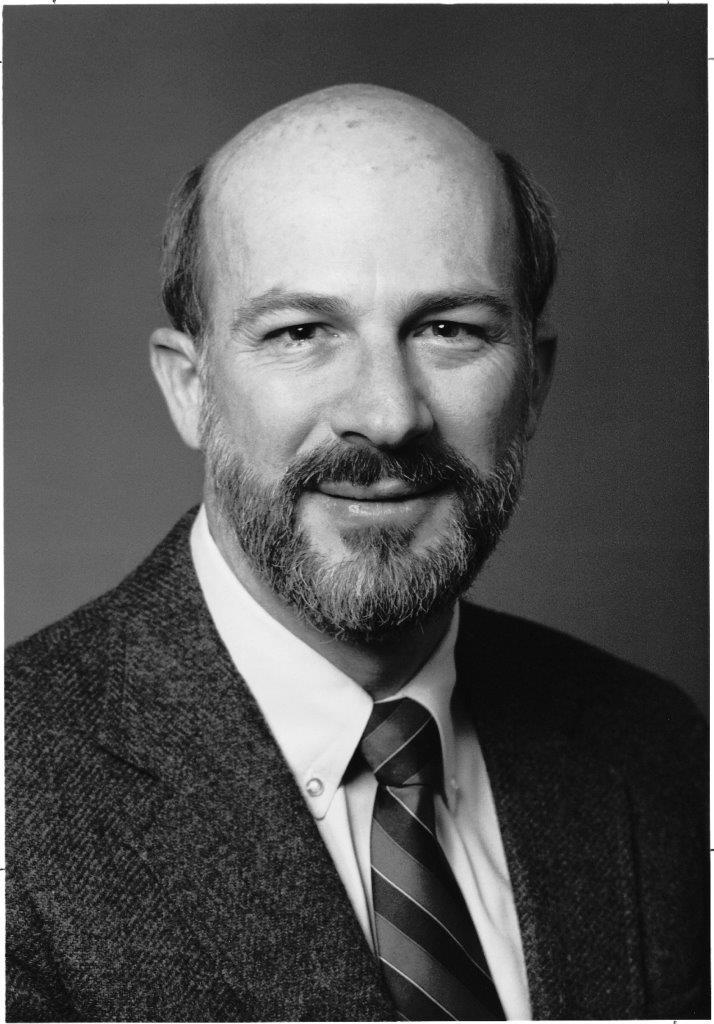
| Carl Avers in 1986 |
Carl Ervin Avers was born on April 26, 1938 in Clay, St Clair, Michigan and died November 18. 2022, Poland Ohio. He graduated from Michigan Tech in 1962 and in 1968 completed a course in Special Finance at Stanford University.
He began his career as a junior engineer at San Diego Gas & Electric Company in 1962, where he advanced to the level of Project Manager. He was involved in developing cogeneration and steam distribution systems for military bases in the SDG&E service territory. The company formed a wholly-owned subsidiary, Applied Energy, Incorporated, that received a franchise to install heating and cooling pipes in downtown San Diego in 1971 and built a district cooling system that started out serving two federal buildings in San Diego. Applied Energy was sold to Energy Factors in 1983 and the district cooling system was sold several times before being bought by Cordia in 2022.
Avers was hired in 1973 as the chief engineer and project manager for the Nashville Thermal Transfer Corporation's waste-to-energy project, which provided steam and chilled water to buildings in downtown Nashville.
In October 1980 Avers bought the Ohio Edison system system in Youngstown for $1 million and formed Youngstown Thermal, which was reportedly a subsidiary of Synergy Systems Management Corp. of Coral Gables, Fla. Avers was to have a long (40+ year) relationship with Youngstown Thermal.
Thermal Resources of America, Inc. was incorporated in Ohio on February 10, 1983. This company bought the Ashley steam plant in St. Louis.from Union Electric in December1984 for $1.1 million, while the Bi-State Development Corporation acquired the steam distribution network with $1.9 million that was provided by Thermal Resources. Avers wanted to build a waste-to-energy plant to provide lower-cost steam for the network and approached Catalyst Energy Development Co. to fund the new $70 million plant in the city. Catalyst agreed and on December 31, 1985 Thermal Resources of America, the Youngstown, Ohio,-based parent company of Thermal Resources of St. Louis, merged with Catalyst Energy Dec. 31 and formed a new company called Catalyst Thermal Energy Corp. that will be the main operating subsidiary of Catalyst Energy. Avers was named as president of the new company, which bought the following systems:
Baltimore March 1985
$10 million
Philadelphia
July 1986 $30 million
Boston
September 1986 $32.5 million
Catalyst Thermal also bought the Cleveland system in December 1987 and sold it to IPALCO subsidiary Mid-America Energy Resources in July 1991.
In July 1988, Thomas B. Pickens 3d (son of T. Boone Pickens) bought control of Catalyst Energy for $202.5 million and Catalyst Thermal became United Thermal Corporation in April 1990. United Thermal was sold to Trigen in 1993 for $65 million.
Avers resigned as president of Catalyst Thermal in January 1990 but retained control of the system in Youngstown, where he formed Thermal Ventures, Inc (TVI). the same month.
TVI bought the Equitable Gas-Energy system in Pittsburgh in 1990 for about $7.4 million (?).
TVI bought the system in
San Francisco from Pacific
Gas & Electric in 1990 for about $9 million but the sale was not
approved until June 1993.
TVI bought these two systems for $16.4 million and sold 50% of them to NRG
Energy in 1995. TVI also leased the steam system in Akron that year. TVI
sold the remaining 50% to NRG Energy in 1999, while keeping Youngstown and
TVI leased the steam system in Akron in 1995 and it was acquired by Akron Energy Systems in 2007.
The system in Detroit was acquired in 2003 and has since xbeen sold twice.
References
1970 "New Steam Machine at NTC To Hold
Down Air Pollution," Evening Tribune, July 23, 1970, Page
24.
Carl E. Avers, project engineer for the $3.5 million combination
electricity-generating and steam-producing the San Diego Gas &
Electric Company is building at the Naval Training Center.
1974 San
Diego Gas & Electric Company Annual Report 2003, February
21, 1974
Page 30: The $40 million Federal Office Building and Courthouse in
downtown San Diego will occupy three city blocks when it is completed in
mid-1975. Six stories high, it contains810,000 square feet of space. The
21-story tower under construction in the background also is being built
for the Federal Government. It is the Metropolitan Correctional Center.
Both buildings are situated at the western end of a 15-block redevelopment
area, which is planned as a pedestrian-oriented urban center. In
addition to supplying electricity and steam for the two federal
facilities, SDG&E will furnish chilled water for air conditioning,
through its wholly-owned subsidiary, Applied Energy Incorporated.
1980 "Ohio
Edison to sell steam heat system," The Plain Dealer, June 6,
1980, Page 18.
Ohio Edison Co. has agreed to sell its unprofitable steam heating system
serving the downtown here to a new energy development company that plans
to use it to convert waste materials to fuel, the utility company said
yesterday.
And, in a related action, the Public Utilities Commission of Ohio said it
would allow Ohio Edison to close its steam heat system in Springfield as
of Nov. 1.
The sale of the Youngstown plant and distribution lines to Youngstown
Thermal Corp. must be approved by PUCO, which will hold hearings on the
matter. Youngstown Thermal is a subsidiary of Energy Systems Management
Corp., of Coral Gables, Fla.
No price was disclosed. The company, backed by Florida investors, must
install new dust collecting equipment to comply with federal air pollution
laws. It intends to use municipal trash, industrial wastes and
sawdust.
Ohio Edison has been trying to close the Youngstown system since 1974,
when it was first denied permission by PUCO. The utility said rising fuel
costs and environmental requirements made running such systems too costly.
The system distributes excess steam from the utility's boilers through
underground mains to heat 117 downtown stores and offices. The Springfield
system serves 35 customers in 19 buildings.
Ohio Edison, which provides electricity to 830,000 customers in 36 Ohio
counties, also operates a steam heat system in Akron. That plant will be
taken over by the city once Akron's new garbage-burning energy recycling
plant been in successful commercial operation for 90 days.
1983 "Board
Authorizes Sale," Needles Desert Star, April 6, 1983, Page
6.
San Diego Gas and Electric's Board of Directors has authorized the sale of
its wholly-owned subsidiary Applied Energy Incorporated (AEl) to Energy
Factors, Inc. While terms of the. transaction are not yet final, the
selling price was approximately $45 million. SDG&E has the option to
take approximately 20 percent of stock of Energy Factors, Inc., as partial
payment for the sale. AEI, a non-regulated venture founded in 1968 to
develop and manage congeneration projects, is the largest company of its
kind in the Western United States.
Its customers include the U.S. Navy, a number of large customers in
downtown San Diego, and Burroughs Corporation in Rancho Bernardo.
1986 "Merger Gives
Thermal Funds for Plant," St. Louis Business Journal, January 27,
1986, Page 20C.
Thermal Resources of St. Louis soon will have the money to begin
construction of its trash-to-energy facility and to expand its steam heat
market downtown as a result of its proposed merger with New York-based
Catalyst Energy Development Corp. Thermal Resources of America, the
Youngstown, Ohio,-based parent company of Thermal Resources of St. Louis,
merged with Catalyst Energy Dec. 31 and formed a new company called
Catalyst Thermal Energy Corp. that will be the main operating subsidiary
of Catalyst Energy.
1986 Avers elected president of the IDHCA and receives the first Norman R. Taylor Award.
1987 Thermal Resources of St. Louis, Inc.was incorporated in Missouri on February 2, 1987.
1987 "ON
THE MOVE KILKENNY JOINS STEAM UTILITY HOLDING FIRM," Journal of
Commerce, October 15, 1987
Jay F. Kilkenny joins Catalyst Thermal Energy Corp. as president of this
owner of district steam utilities.
Mr. Kilkenny was a vice president at the financial services company
Primerica Corp. and its predecessor, American Can Co. Carl E. Avers,
who was Catalyst Thermals' president, becomes chairman, a new title. The
company sells piped steam to downtown customers in Philadelphia, Boston
and other cities.
1988 ASHRAE Journal
30(1):36 (January 1988)
Jay F. Kilkenny has joined Catalyst Thermal Energy Corporation, New York,
New York, as president, succeeding Carl E. Avers who has been elected
chairman. Kilkenny was with American Can Company, while Avers served
as president and director of Catalyst Thermal. Catalyst Thermal is
the nation's second largest producer of steam.
1988 "A Highflier's One
Final Gamble," The New York Times, March 30, 1988, Page D1
Perhaps the boldest is John D. Kuhns, founder and chief executive of the
Catalyst Energy Corporation, the largest of the new independent companies
that produce and sell electricity to utilities.
For instance, when Catalyst acquired a St. Louis steam maker, it kept free
of state regulations by not buying the steam pipes, instead persuading a
state agency to buy them and lease them back for $1 a year. Missouri law
exempts power producers that do not own their distribution channels.
1988 "Pickens's Son Wins Catalyst Energy In His First Solo Bid for a Public Firm," Wall Street Journal, July 22, 1988, Page 1.
1990 "Catalyst Thermal
Energy Corp.," The Wall Street Journal, January 15, 1990, Page B7.
Carl E. Avers, 52-year-old founder of this owner and operator of
steam-energy systems, resigned as chairman. He will continue with the
company as a consultant and chairman emeritus. He is succeeded by Thomas
B. Pickens, 32, chairman and chief executive officer of the Catalyst
Energy unit. Jay F. Kilkenny, 40, resigned as the parent's president to
join Recovery Corp. of America, a medical-waste disposal concern here. He
is succeeded by Peter J. Fagan, the company's chief financial officer
since 1987. Steven G. Smith and Richard S. Strong, who serve as president
and general manager of the company's steam systems in Philadelphia and
Boston, respectively, were named executive vice presidents of the parent,
in addition to their current responsibilities. Both are age 47.
1990 Thermal Ventures, Inc, a Delaware corporation, was registered as a foreign corporation in Ohio on January 29, 1990.
1990 "Catalyst Energy
Corp," Wall Street Journal, October 17, 1990, Page B8.
Catalyst Energy Corp. said it told its 83.5%-owned subsidiary, United
Thermal Corp., that it plans to find a purchaser for the stake.
Catalyst, a supplier of steam energy, said it expects to enhance
shareholder value from the sale and named Lehman Brothers as adviser.
Last March, Catalyst suspended its five-cent quarterly dividend, saying it
needed to conserve cash for capital spending in existing plants and
various development projects. Catalyst officials weren't available for
further comment.
1992 "The
District Heating Renaissance," Independent Energy
22(7):64-68 (September 1992)
Carl Avers is president of a growing company. His company,
Pittsburgh, Pa.-based Thermal Ventures Inc., has plans to expand the
district heating and cooling (DHC) systems it owns in Youngstown, Ohio,
and Pittsburgh and is also planning to acquire the San Francisco, Calif.,
steam system owned by Pacific Gas & Electric. Thermal Ventures, along
with the United States’ three other largest DHC companies —United Thermal
of New York City, Trigen Energy Corp, of White Plains, N.Y., and
Indianapolis-based Mid-America Energy Resources— are expanding as demand
for their services grows.
1993 "Trigen completes
purchase," Wall Street Journal, December 6, 1993, Page B5
Trigen Energy Corp. said it completed the acquisition of more than 90% of
United Thermal Corp. for $4.50 a share, or a total of about $65 million.
Trigen, a developer of heating and cooling systems, said it acquired 83.5%
of its United Thermal stock from Catalyst Energy Corp., a closely held New
York energy concern, and another 6.5% stake from other United Thermal
shareholders.
1994 "Thermal
Ventures Pursues Growth Plans in San Francisco, Pittsburgh, Youngstown,"
District Energy 80(2):10-13 (Fourth Quarter 1994)
Avers, who led United Thermal Energy Corp.'s purchase and expansion of six
systems before leaving as the company's chairman in 1990, has quickly
picked up where he left off. Founded in 1990, Thermal Ventures now
operates steam district heating systems in San Francisco, Calif.,
Pittsburgh, Pa., and Youngstown, Ohio, as well as a district cooling
system in Pittsburgh.
Expansion plans are under way in all three cities. In Youngstown,
expansion plans include a new district cooling service.
Thermal Ventures was formed in 1990 to do what Avers and Mahoney had done
best at United Thermal - acquire, operate and improve district energy
systems.
"By 1988, United Thermal had essentially gotten out of the business of
acquiring district heating and cooling systems," Avers recalls.
1997 "Investments
top business plan at Thermal Ventures," Youngstown Business
Journal, January 1, 1997
The business plan at Thermal Ventures Inc., Youngstown, is to continue to
make capital investments in energy-efficiency projects, says Lewis A.
Mahoney, co-founder of the company with Carl E. Avers, chairman. "We also
plan to add new customers to each system," he says. "Our assets increased
from $27.5 million in 1995 to more than $30 million last year."
1996 revenues, Avers adds, are estimated at $28 million. Acquisitions are
in the works for 1997, he says, as well as expansions at the four
steam-heating and cooling systems the company owns in Youngstown,
Pittsburgh, San Francisco and Akron.
Last year, Akron was the primary project, requiring a $3-million overhaul.
The Akron system is one of the largest in the country, serving 250
customers including three hospitals. Thermal Ventures began operating part
of the Akron Steam System in August 1995, taking over full operations the
following November.
During the last 18 months, the system was transformed from a money loser
to a profitable system, primarily by switching from gas fuel to
Ohio-produced coal and wood. "About 22 percent of our energy comes from
tree trimmings," Avers explains. "Some wood comes from as far away as West
Virginia, but most of it comes from tree trimmers within a 50-mile radius
of Akron. Burning wood is a first for Thermal, but it is going well and we
may add wood fuel to some of our other operations."
Akron also is expanding its 4,000-ton district cooling system by
installing a new plant that will serve the new downtown baseball stadium
and other nearby buildings.
At least one additional system now being studied will be acquired this
year, Avers says.
Some growth, he adds, will come from universities, industries and
hospitals looking to spin off on-campus district heating and cooling
systems as part of efforts to restructure and concentrate on their core
business interests.
Other systems posted considerable activity last year. Several hotels and
city buildings, for example, joined the 200-building steam system in San
Francisco. In Youngstown, Powers Auditorium joined the district cooling
system, which now serves the Home Savings and Loan and Edison Incubator
buildings.
In Pittsburgh, buildings at Allegheny Community College were added to the
district heating and cooling pipelines. "The college turned over its
cooling and heating system pipes to Thermal as a privatization of its
utility infrastructure," Avers reports.
Thermal Ventures likely will continue to benefit as a result of U.S.
Environmental Protection Agency initiatives stressing fuel efficiency
alternatives and banning use of refrigerants that destroy the earth's
ozone layer. "The requirement for low oxides of nitrogen burners on
boilers is helping grow our San Francisco business, where base-load
boilers at our plant have been converted to low oxides of
nitrogen-emission systems," Avers explains.
"We spent $600,000 last year on new low-nitrogen burner systems, which
reduced nitrogen production by about 70 percent on our gas-fired boilers.
The EPA will be forcing in-building boiler systems to convert their
boilers. At that point, district heating becomes an even better
alternative."
1997 NRG
Energy, Inc. SEC Form S-1/A, October 9, 1997
Page 69: In August 1995, NRG purchased from Thermal Ventures, Inc.
("TVI"), a 49% limited partnership interest in each of two district
heating and cooling projects, one in San Francisco (San Francisco Thermal
Limited Partnership or "SFTLP") and the other in Pittsburgh (Pittsburgh
Thermal Limited Partnership or "PTLP"). NRG and TVI then established North
American Thermal Systems LLC ("NATS") for the purpose of jointly owning
their respective general partnership interests in these two district
heating and cooling companies. In 1996, NRG paid $2.8 million to the
owners of TVI and made a capital contribution of $500,000 to NATS in
exchange for the sale of the 1% general partnership interests in each of
PTLP and SFTLP to NATS. NRG and TVI participate equally in SFTLP and in
PTLP and each owns 50% of the membership interests in NATS. As of June
1997, NRG's investment in PTLP was $3.9 million and NRG's investment in
SFTLP was $5.1 million.
PTLP and SFTLP are both regulated utilities that operate under tariffs and
are rate-regulated. PTLP owns and operates a district heating and cooling
system that serves part of downtown Pittsburgh and has peak steam capacity
of 240 mmBtus per hour (70 MWt) and 10,180 tons of chilled water per year.
PTLP serves 24 customers with 300 million pounds of steam per year and 21
million ton hours of chilled water per year. SFTLP is the sole supplier of
steam to downtown San Francisco, which it serves through its district
heating system that has steam capacity of 490 mmBtu per hour (144 MWt).
SFTLP serves approximately 210 customers with approximately 700 million
pounds of steam per year that is used primarily for space and domestic
heating and absorption air-conditioning.
NATS is currently considering the acquisition of several other district
heating and cooling companies. NRG has agreed to make additional payments
to the principals of TVI of up to an aggregate of $7 million until January
1, 2003 for reaching performance benchmarks of current and future NATS
operating entities. There is no assurance that NATS will consummate any
additional acquisition
2000 Thermal Ventures II, L.P., a Delaware limited liability partnership, was registered as a foreign limited partnership in Ohio on June 27, 1000
2001 "Carl
E. Avers," Michigan Tech
Carl Avers earned a BS degree in Mechanical Engineering from Michigan Tech
in 1962. He continued his education in 1968 at Stanford University
completing a special course in Special Finance, Economics, Accounting and
Engineering Economy. Carl began his career in 1962 at the San Diego Gas
& Electric Company as a Junior Engineer. He advanced in the company to
the level of Project Manager before becoming a successful entrepreneur and
consultant in the thermal energy area beginning in 1970 when he first
developed Applied Energy, Incorporated. From 1975 until 1980 he was the
Director of Advanced Energy Systems Division for Ellers, Fanning, Oakley,
Chester & Pike, Incorporated. Avers was the principal business
architect for a start-up company in 1980 that by 1987 became a 500
employee, $125 million revenue energy company.
He is currently CEO and Chairman of Thermal Ventures Incorporated, a
company he co-founded in 1989. Thermal Ventures owns and operates energy
systems in four cities and is based in Youngstown, Ohio. With revenues in
excess of $30 million in 1998 they employ over 100 individuals. Carl is
also the Chairman, President and -CEO of Thermal Venture II, LLC, which
was formed in 2000 with Yorktown, a financial investor for the purpose of
acquiring and developing a major district heating, cooling and electricity
generating business with units throughout the country.
Carl has written several publications and has presented numerous technical
papers. In 1986 he received the first man-of-the-year Norman R. Taylor
award by the International District Energy Association. He is a registered
Professional Engineer in the states of California, Tennessee and Florida,
a member and past President and Director of the International District
Heating and Cooling Association, was a board member of a NYSE company,
Catalyst Energy & Development Corporation, and a director of Entropy
Systems, Incorporated.
2004 "Thermal
Ventures II," The Vindicator, July 17, 2004
The company that provides steam heat to downtown Youngstown expanded into
Detroit last year and is on the verge of growing again.
Youngstown-based Thermal Ventures II is studying more acquisitions and
plans to add a new system every year, said Jeff Bees, company president
and chief executive.
Bees declined to say anything about potential additions other than that
the company isn't afraid to take on systems that need new investment to
improve their operations and efficiency. Such deals take about a year to
review, he said.
Company history
The parent company of Youngstown Thermal has the money to buy other
heating systems because of a partnership created in 2000 with Yorktown
Energy Partners, a New York investment firm that handles endowment money
for some major universities.
Yorktown owns a controlling interest in Thermal Ventures II, which was a
new entity created for the purpose of expansion. Yorktown wanted to expand
its investments and liked the local company's expansion plans, Bees said.
Thermal Ventures II was created out of Thermal Ventures Inc., which was
founded by Carl Avers and Lewis Mahoney.
The original company remains but has moved its headquarters to Akron,
where it operates a steam heating system for much of downtown. Thermal
Ventures Inc. retains a minority ownership interest in Thermal Ventures
II.
Mahoney retired in 1999, but Avers continues as chairman of Thermal
Ventures Inc. Bees had been general manager of Youngstown Thermal and
Akron Thermal before being named the leader of Thermal Ventures II.
He said the agreement that created Thermal Ventures II gives it the option
to bring Akron Thermal under its umbrella, but it hasn't yet done that.
Preparation for growth
Avers said, however, that he intends for Thermal Ventures to grow and has
just created a management team of people in their mid-40s to lead the
company into the future. Avers, 66, said customers sign long-term
contracts for steam and want to have stable management in place when they
sign such deals.
The Akron company is looking to grow by taking over the heating systems
for large industrial plants in the region and throughout Ohio and western
Pennsylvania, he said. Thermal Ventures previously had ownership stakes in
downtown systems in Pittsburgh and San Francisco but sold those in 1999.
Meanwhile, Thermal Ventures II is looking to expand with more district
heating systems such as the ones in Youngstown and Detroit. Youngstown's
system serves about 50 customers, while Detroit's system has about 135
customers with 250 buildings.
Youngstown Thermal also has a cooling system with four customers.
Bees said now is a good time to grow because utilities that operate steam
systems around the country are reconsidering their investments in those
systems. Some utilities are preferring to invest in natural gas
exploration instead of upgrading steam systems because of the rising cost
of natural gas, he said.
In limbo
Thermal Ventures II also owns steam systems that heat two industrial
plants, although company officials are less interested in such systems
going forward, Bees said.
The future of both systems is up in the air, he said. One is at a
manufacturing plant in Tennessee, which may be closed by the manufacturer.
The other is at an industrial park in Virginia which has lost its largest
tenant.
Thermal Ventures II also is looking to sell two hotel heating systems it
owns in Orange County, Calif. It bought the systems in 2000 to serve
hotels that were expected to develop in the area. The development didn't
occur, so the company intends to sell the systems to owners of the hotels
where they are located, Bees said.
Thermal Ventures II, which has about $50 million in annual sales, has its
headquarters at Penguin Place at North Champion Street and East Rayen
Avenue. The former telephone company and university classroom building was
renovated by Leslie Cochran, former Youngstown State University president,
and his wife, Lin.
Thermal Ventures II has nine employees in the top floor of the building
and is trying to lease the bottom floor. The company has 120 employees
throughout all of its systems.
The Youngstown system has about six miles of steam lines that range in
diameter from three inches to 18 inches.
Youngstown Thermal's plant between Belmont and North avenues at the edge
of downtown uses coal to fuel boilers that make steam. Pressurized steam
is taken from the plant to the heating system of a building, where the
steam raises the temperature of a coil in a heat exchanger. The heat is
then distributed by ducts in the building.
2012 "CEO::
Plant ‘to stop burning coal’," The Vindicator, January
29, 2012
Sulphur-dioxide emissions from Youngstown Thermal’s North Avenue steam
plant have increased in recent years because it recently has been burning
higher-sulphur coal, according to Carl Avers, the company’s chief
executive officer.
The plant is burning higher-sulphur coal because its coal supply is being
mined from higher-sulphur veins than were previously mined, Avers said.
Although Youngstown Thermal has received several air-pollution warnings
and citations from the Ohio Environmental Protection Agency in the last
decade, including a 2010 citation for excessive sulphur-dioxide emissions,
all were resolved without fines or penalties, according to Mike Settles, a
state EPA spokesman.
However, the company was fined $1,000 and ordered to take corrective
measures in a 2005 settlement agreement with the U.S. EPA concerning a
citation for excessive ash and soot emissions.
The 20,000 tons of coal burned annually in the plant comes entirely from
Ohio and costs the company about $75 a ton, Avers said.
To haul in lower-sulphur out-of-state coal, Avers said: “We’d have to get
it out of Kentucky at about twice the price” or from the western United
States at prohibitive prices.
Despite the doubling of coal prices in the past decade as demand increased
due to China’s purchases of American coal, the North Avenue plant is still
heavily coal-dependent because coal is still much cheaper than oil and
natural gas, Avers said.
However, Avers said his plant this year will begin burning waste wood,
which is plentiful at sawmills, cheaper and causes less air pollution than
coal.
“There’s too much pollution from the coal” burning, and waste wood burns
“only a little cleaner than coal,” observed George Peya of Youngstown,
chairman of the local Salt Springs Group of the Ohio Chapter of the Sierra
Club.
The Sierra Club is a San Francisco-based national environmental quality
advocacy organization now engaged in a “Beyond Coal Campaign” designed to
promote the replacement of coal burning with cleaner energy sources.
Peya said he prefers natural gas, which he said is much cleaner burning
than coal or wood. Coal is the fuel for three Youngstown Thermal boilers
and natural gas fuels the company’s backup boiler.
“When you harvest a tree, about 50 percent of it becomes waste” and the
waste wood can be acquired for the cost of transporting it, Avers said.
Besides sawmills, Avers said he hopes to acquire waste wood from
storm-related municipal tree-cuttings. He also said trees killed by the
ash borer will add significantly to the waste-wood supply.
Avers acknowledged that the U.S. and Ohio environmental protection
agencies will soon lower smokestack- emissions limits to the point where
coal-burning plants can’t meet them. “We’re going to stop burning coal,”
he said.
To meet the new emissions limits, Avers said he plans to buy and install
coal and wood gasification equipment, with the plant burning the gas
produced in the process and keeping the sulphur within the plant in the
ash, which can easily be removed and disposed of properly.
“From an environmental standpoint, it’ll be as clean as natural gas,”
Avers said of the gasification process.
“I could see a practical use of that for something like demolition wood
from homes, rather than burying it in a landfill,” Peya said of
gasification technology.
“My strategy is to go to wood first and eventually put in these
gasifiers,” Avers said. “My job is to manage the fuel to the lowest cost
for my customers,” Avers added.
“Many people visit our plant, and they can’t believe that we burn coal
there,” Avers said, noting that smoke from its smokestack’s isn’t visible
most of the year.
That’s because the North Avenue plant uses an advanced technology known as
flue gas re-circulation, which keeps soot within the plant, where it is
burned up, he explained.
2015 "$5M
Price Tag for Thermal’s Turnaround Plan," Youngstown Business
Journal, July 28, 2015
YOUNGSTOWN, Ohio – Carl E. Avers, the CEO of Youngstown Thermal LLC, was
something of a white knight in the 1980s when the downtown steam system
was rescued from Ohio Edison, then expanded and updated with a $7 million
investment. Installation of a district cooling system followed in 1996 as
Avers widened his business horizons to steam plants in Akron, Detroit and
elsewhere.
“Youngstown is the smallest system I’ve worked on,” says Avers, 77. “Now
I’m of the age that I want to bring to Youngstown what I’ve brought to
other cities and that is an enlightened and more advanced energy system.”
But Avers also brings baggage — legal challenges and competitive threats –
as he seeks $5 million to fund construction of a natural gas-fired
co-generation power plant at the company’s North Avenue headquarters (READ
STORY).
He’s embroiled in a two-year personal bankruptcy case pending in U.S.
Bankruptcy Court in Erie, Pa., in which he listed personal assets of
$5,100 and liabilities of $59 million. Documents filed in the case reveal
a tangled string of corporate entities and family trusts that creditors
are attempting to unravel in their search for liquidation value. The
largest unsecured creditors and the bankruptcy trustee accuse Avers of not
fully disclosing his assets. And the judge hearing the case, Thomas P.
Agresti, wrote in a July 21 order that he “has had enough [with Avers’]
“delay and obfuscation [in refusing] to turn over corporate records and
accounting materials.”
Attorney Gary V. Skiba, who represents Avers, challenged these assertions
in a letter to the bankruptcy trustee, Richard W. Roeder of Titusville,
Pa., posted July 27 on the case docket. Skiba said the records involve
“defunct entities [that] have had no value for anyone in quite some time,
as even your report concludes; and absolutely no one had any interest in
maintaining records that had no useful purpose.”
Foreshadowing all of this is the bankruptcy and eventual closing of Akron
Thermal, which Youngstown Thermal began operating in 1995 under a contract
with the city of Akron. This city’s district heating system was purchased
in 2004 by one of the multitude of evolving corporate entities, filed
bankruptcy in 2007 with creditors owed $20 million and ceased operations
in 2009.
Today the long-term viability of Youngstown Thermal is threatened by the
loss next June of its largest customer, Youngstown State University, which
accounts for $3.2 million, or 60%, of Thermal’s annual revenues. And the
city of Youngstown, which buys Thermal’s steam to heat five of its
buildings, has set an Aug. 6 deadline for companies to submit proposals
for construction of a municipal power plant to heat and cool city
buildings, or a district utility system that would potentially serve the
entire central business district.
The city pays Thermal “approximately $214,392” annually for steam heating
at five buildings: City Hall, the Youngstown Police Department, 20 Federal
Place, the City Hall Annex and Fire Station No. 1.
Companies responding to the RFP are given two options. First, submit a
proposal for “a 20-year heating and cooling rate based on services
supplied by existing heating and cooling plants.” Or submit a 20-year rate
proposal “based on services supplied by building, operating and
maintaining a localized energy plant(s) in City Hall or any other location
identified by the proposer as appropriate.”
Johnson Controls, the Milwaukee-based energy management company to whom
YSU awarded a $16 million contract in June to build a steam plant on
campus, is expected to submit a proposal for the city’s business. So, too,
is Youngstown Thermal.
The company will offer a proposal to provide steam heating as well as and
cooling and electricity for municipal buildings, Avers says. Youngstown
Thermal serves some 50 buildings in the central business district in
addition to YSU, and employs 21.
Avers is emphatic that he knows how to save downtown area businesses $30
million a year in combined energy savings. “Most of the customers downtown
do not know how to buy energy in this deregulated market – and they are
paying twice as much as they should,” he says.
“I really want the city to be a champion of this. It’s going to benefit
the entire business community,” he adds.
His vision, the “Youngstown Energy Plan,” has been presented to City
Council and to the Downtown Youngstown Economic Action Group. The case
study converts downtown businesses from spending 92 cents of every energy
dollar on buying electricity from Ohio Edison to just 15 cents, instead
using Youngstown Thermal’s steam for heating (30 cents) and cooling (30
cents), and the company’s “progressive purchasing program” whereby Thermal
would buy and resell electricity and manage consumption (25 cents).
The plan, essentially Thermal’s turnaround strategy, begins with
construction of a $5 million natural-gas fired co-generation system that
would produce steam for heating and cooling, as well as 3.5 megawatts of
electricity, which Thermal would sell to the power grid. Integral to the
$30 million in overall energy cost savings that Avers estimates downtown
businesses would enjoy is Thermal becoming a substantial reseller of
electricity and implementing “micro-grids,” which he describes as a
“small-scale centralized electricity system that relies on the power grid
for electricity but manages demand or capacity charges.”
Youngstown Thermal has engaged Pennoni Associates, based in Philadelphia,
as its “strategic partner” to engineer and design the co-generation plant,
and help secure new electricity customers. The project’s timeline is 18 to
24 months, according to Avers.
“We are working with Youngstown Thermal to move them from coal to natural
gas and improve the overall efficiency of their operations,” affirms David
Ferro, director of energy manager management services in Pennoni’s
Columbus office. “A lot of these customers in Youngstown are overpaying
for electricity. The broker fees and the way people are buying energy are
adding extraordinary costs to the end users.”
Pennoni employs 1,200 at 29 offices nationwide and recently celebrated 50
years in business. “We buy energy for Fortune 500 companies across the
nation and we help them anage it,” Ferro notes.
According to Avers, a division of Youngstown Thermal formed one year ago
already sells electricity “indirectly to 18 buildings” including the
Realty Tower and Erie Terminal. “The next step in this process is
generating electricity. But first I wanted to get some customers under my
belt and then move to becoming a load supplier,” he says.
All it takes is money — financing by the company, securing new debt and/or
new investors — and here the math gets fuzzy.
“Obviously the financing needs to be there to do what we’re trying to do,”
says Pennoni’s Ferro, who cites a confidentiality agreement that precludes
him from discussing whether his company – or anyone else—is ready to fund
the $5 million co-generation plant.
“They have sources of money if I don’t put up the money,” Avers says of
Pennoni.
“We have commitments already for sponsoring this, all of it, but I’d
rather not say who. We will get the money. There is no impediment to this
project going forward,” he says.
2015 "Avers
Responds to Stories about Youngstown Thermal," Youngstown
Business Journal, July 31, 2015 | article
on Wayback Machine |
The CEO of Youngstown Thermal LLC, Carl E. Avers, offers “some
perspective” on this week’s three-part series of reports on his company.
In a letter to the publisher of The Business Journal, Andrea Wood, who
researched and wrote the reports, Avers says, “It is my vision that the
community will come together as they did in 1979 to, not only to save the
downtown steam system but make it prosper for the benefit of its current
and future steam customers. “
Avers was referring to his Youngstown Energy Plan, detailed in one of the
stories published this week:
Part One: Thermal Losing 60% of Revenue; CEO in Bankruptcy | article
on Wayback Machine |
Part Two: $5 Million Price Tag for Thermal’s Turnaround Plan | article
on Wayback Machine |
Part Three: YSU to Borrow $16M to Build Its Own Steam Plant | article
on Wayback Machine |
Avers’ letter enclosed documents that can be downloaded below.
Here is the full text of his letter:
Attached is a document that shows the information on the Baltimore,
Boston, Philadelphia, Cleveland, Pittsburgh and San Francisco steam
systems. This financial analysis shows the purchase price and the quick
turn-a-round of these systems within one year.
In effect, we are at year one for Youngstown Thermal. We have a business
plan going forward that will have similar positive and dramatic results as
we did at all of these systems.
A second attachment is all of the financings that we have done as a group
of engineers from 1980 through 2000, a span of 20 years. During that 20
year period we raised $173,590,000. All of these debts were retired with
interest. All of these companies continue to be very successful and have
been grown to serve more customers. A number of these systems included
power generation which is what we envision for Youngstown Thermal’s future
as well as district heating and district cooling.
We acquired the Cleveland system in 1987. Since that time, $35 million of
investment was made into a district cooling system. We sold the Cleveland
System to an electric utility. They, in turn, sold it to a private
investor. Last week it was sold to an electric utility headquartered in
Canada. They plan a similar but different go forward business plan to that
which we envision for Youngstown.
Since our first acquisition in 1979 energy prices have increased
dramatically and they will continue to increase dramatically. Today, it
takes a community organization to structure a community business
arrangement that will insulate the community from rapidly increasing
energy costs.
To underscore and reinforce my confidence in structuring a new energy
system for our greater Youngstown community I’ve included a copy of a
recent article in Crain’s Detroit Business newspaper dated July 13, 2015.
Customers in Michigan spent $253 million on energy improvement projects.
That investment is returning $948 million per year to these customers on
reduced energy costs. As you are aware, we have identified approximately
$30 million of annual savings for the greater Youngstown downtown
community. This group of energy users spend $70 million per year. Much of
this expenditure is unnecessary in the marketplace. Part of our program
will be one of the education to help building owners acquire the right mix
of utility services at the appropriate price.
The first company roll up that we organized here in Youngstown beginning
in 1979 was called Catalyst Thermal Energy Corp. I’ve attached an annual
report of that company from 1987. That was the period that we acquired the
systems in Philadelphia, Boston and Cleveland and closed on their
respective purchases all within a 6 month period. All of these systems are
enjoying good financial health and we are proud of having been responsible
for acquiring these facilities form electric utilities and, after our
investments and restructuring, set them on a path to a better serve their
respective communities.
It is important to understand that our management team never bought the
Akron steam system. The Akron Steam System is owned by the City of Akron.
Akron Thermal added Akron University to the system as well as the Summa
Health Hospital when we were brought in as “operators” of that system in
1994. I formed Akron Thermal as an operating company and operated Akron
Steam under Akron Thermal from 1994 to 2004. I left Akron Thermal in early
2004. I was not the operator in 2007 when the company declared bankruptcy.
Soon after I departed Akron as the operator in 2004 major customers left
the system including the university and a hospital. While I managed that
system we expanded the district cooling system to serve 12 additional
buildings and that system continues to grow. In 1960 no cities had
district cooling and today 67 cities have installed downtown chilled water
systems. Generally, these were installed by electric, steam and gas
utilities to address high electric bills on high priced peak load
conditions.
I hope this puts some perspective on Youngstown Thermal. The Youngstown
community sets at the brink of embracing the Youngstown Energy Plan or
not. It is my vision that the community will come together as they did in
1979 to, not only to save the downtown steam system but make it prosper
for the benefit of its current and future steam customers. Ohio Edison
estimated the cost to place new boilers in all of the buildings downtown
at $50 million. Continuation of the steam business while augmenting it
with power generation is the obvious and better choice. Bringing $30
million of savings to the community as a companion project is the smart
approach.
Sincerely,
Carl E. Avers
Chairman & CEO
Youngstown Thermal
2016 "Avers
to ask city to consider Thermal," The Vindicator, November
7, 2016
Today, the executive of the city’s district energy system will present why
he thinks the city should stick with steam.
Carl Avers, chief executive officer of Youngstown Thermal, wants to keep
the city on the system for heating, add cooling services and change the
way the city turns on the lights.
Avers asked for a chance to present his plan for the city, which is what
he will do at 5 p.m. today at the city council meeting of the buildings
and grounds committee.
“We would like them, and frankly everyone else in town, to modernize their
buildings with smart money,” Avers said.
The “smart money” comes from the zero-percent financing Youngstown Thermal
offers on the capital it finds for customers.
“Our capital can only be targeted for energy efficiency,” Avers said.
Youngstown Thermal has proposed to take the city’s utility costs, which
includes steam service, electricity and natural gas, to $2.7 million per
year. In 2015, the city paid out $4,005,065 in utilities, according to the
city’s finance department.
The company would do this by providing district steam services to the city
buildings except the water department, establish steam-based cooling and
contract with the city to enroll in a “progressive” electric purchasing
program.
“It’s a series of projects,” Avers said. “It involves restructuring their
electric and gas services.”
The cost to the city to transition its utilities under Avers’ plan:
nothing.
“The cost comes out of the savings,” Avers said.
Right now, Youngstown Thermal provides steam service to city hall, the
police department, 20 Federal Place, the city hall annex and the downtown
fire station. The city’s natural gas is provided by Direct Energy through
an agreement with Dominion. The city’s electricity comes from
Constellation through an agreement with Ohio Edison.
The city decided last summer to seek bid proposals for its central heating
and cooling services after Youngstown Thermal lost a top customer in
Youngstown State University.
YSU had Johnson Controls, a Milwaukee-based company, build a new $16
million steam plant that YSU said would save about $2 million a year.
“We are concerned about the long-term financial stability of Youngstown
Thermal,” Youngstown Mayor John A. McNally said.
The city also was concerned over some of the challenges other service
users have had with Youngstown Thermal, McNally said.
The mayor recently received a letter from downtown businesses on the
Youngstown Thermal system about their concerns of what would happen to
Youngstown Thermal financially if the city were to go off the system.
“The administration and the council have to think of the effects,” McNally
said.
In addition to Youngstown Thermal, Middleburg Heights-based Brewer-Garrett
Co. submitted a proposal to the city.
In October, the city said it would dump Youngstown Thermal and go with
Brewer-Garrett, but the buildings and grounds committee voted to give
Avers an opportunity to pitch his proposal before a final decision is
made.
Brewer-Garrett’s proposal puts an end to purchasing direct steam
altogether, focusing instead on constructing local boiler plants at the
city-owned buildings previously serviced by Youngstown Thermal.
The steam boilers would have a service life of at least 35 years or more
with proper maintenance, according to the proposal.
During a presentation to the city’s buildings and grounds committee,
Brewer-Garrett said the city would pay the company $1,839,700 for the
work, guaranteeing that the municipality would save at least $3,234,180
over 15 years. After the initial cost, the city would save $1,294,480
under the proposal.
The Vindicator requested the proposed contract between the city and
Brewer-Garrett, but that proposal was denied because it “is exempt from
disclosure as the contract is in the process of being negotiated and
protected by attorney-client privilege,” said Anthony Donofrio, city
deputy law director, in an email.
Before the city enters into an agreement with Brewer-Garrett, city council
and the board of control have to approve it.
2017 "Youngstown
Thermal hints at energy crisis," The Vindicator, June 30,
2017
Youngstown Thermal Chief Executive Officer Carl Avers has been adamant in
interviews this week that customers in his company’s energy network
shouldn’t be afraid they will lose service despite reports of financial
woes.
But his company conveyed a different story to the staff of the Public
Utilities Commission of Ohio earlier this month when it told PUCO that the
state had to intervene in Youngstown Thermal’s financial struggles because
“the current inability of Youngstown Thermal to pay its utility suppliers
could result in an energy crisis in the downtown Youngstown area.”
As a result of an ensuing investigation, the PUCO staff on Thursday
requested the state immediately ask the Ohio attorney general to seek the
appointment of a receiver for the beleaguered energy company.
The commission meets at 2 p.m. today to consider the staff’s
recommendation.
“Through this review, staff determined Youngstown Thermal is unable to pay
utility suppliers, debt service, and employee payroll when those expenses
are due,” the report says. “Therefore, the [PUCO] staff determined the
company is permitting or about to permit a breach of its duty to furnish
adequate service to its customers and is instead insolvent and or in
imminent danger of insolvency.”
In total, there are about 50 buildings that receive heat services from
Youngstown Thermal and four that receive cooling.
Though PUCO would not speculate on what will happen to customers between
now and when the receiving company takes over Youngstown Thermal, Avers
maintained “the public utilities commission is protecting their interest.”
Avers initiated the process of having PUCO investigate Youngstown
Thermal’s financial struggles because it was his “fiduciary
responsibility” to do so.
“I had no choice,” he said. “I have an obligation to tell them that we
have a temporary problem and we need their help to solve it.”
Avers says the process started last year when he realized the financial
impact the loss of his largest customer, Youngstown State University,
would have on his company. YSU left the system in June 2016.
“At that time, YSU represented approximately 60 percent of both the system
load and revenues for Youngstown Thermal,”
PUCO’s staff report says.
Then, Youngstown Thermal lost the U.S. Department of Energy Advanced
Supercritical Project, which was supposed to supplement the loss of YSU.
Avers said the Department of Energy no longer needed to use the Youngstown
Thermal plant for testing.
“The steam they would have used was several times larger than YSU,” Avers
said.
Then, this year Avers says he started to have a hard time collecting
revenue from four major unnamed customers. The Vindicator discovered
Wednesday that one of the customers is the city of Youngstown for the city
hall building. A broken meter led to four-plus years of underbilling that
totals $141,570. The city disputes that figure.
“We have a unique setup of circumstances where major customers are
refusing to pay for services that they have used,” Avers said.
Now, utility suppliers have threatened to shut off the electricity and gas
supply to the North Avenue Youngstown Thermal plant.
The management of Youngstown Thermal also informed the PUCO staff that it
was unable to process payment for payroll.
Without proper staff members in key roles, the plant would be in immediate
jeopardy. PUCO’s report notes, for example, an operator holding an Ohio
boiler license must be present to operate boilers used to generate steam.
“Without a licensed boiler operator on site, the Youngstown Thermal plant
must be shut down until licensed operators can be found to properly run
the plant,” the report notes.
Concerned employees reached out to The Vindicator explaining that though
employees have been paid, their paychecks came days late and they recently
discovered that their health insurance has been canceled.
Another financial concern for the company is a $5 million loan it secured.
The debt from the loan has now reached $7 million and will reach $9
million in December.
Youngstown Thermal also is behind in the annual payments it owes to the
commission.
The staff of PUCO expressed concern for Youngstown Thermal’s record
keeping. In March 2015, the staff requested historical data and current
data for expenses and revenues, operations and finances.
“The results of staff’s analysis were inconclusive because the records
provided by Youngstown Thermal were incomplete, inconsistent, inaccurate,
and in many cases, unavailable,” the report says.
The report further warned, “Youngstown Thermal has not filed for nor has
it received commission approval for any of its [10] existing customer
contracts, as required under Ohio law.”
Youngstown Mayor John A. McNally is hopeful the commission will accept the
recommendation made by PUCO staff.
The report “confirms what many people that have had to deal with
Youngstown Thermal over the past year or 18 months — that there’s a large
degree of financial challenges that Thermal has been trying to deal with,”
McNally said. “I think between Youngstown Thermal and PUCO they will
figure out a way to bridge a gap between now and the appointment of the
receiver.”
Earlier this week, Avers announced the Youngstown Thermal assets are for
sale.
“We have a huge bump in the road in the and we have to get over it,” Avers
said. “It will survive.”
2019 "Youngstown
Thermal has a deal in place to sell," The Vindicator, May 3,
2019
Youngstown Thermal, a steam utility company that is supposed to provide
heating and air cooling services to about 40 downtown customers, could be
sold for $250,000.
The agreement was signed April 19 with SOBE Energy Solutions of Dublin,
according to documents obtained by The Vindicator.
The documents states Reg Martin, Youngstown Thermal’s receiver, “reports
that the sale price is believed to be the highest and best price to be had
in the foreseeable future.”
The deal won’t be finalized until Judge R. Scott Krichbaum of Mahoning
County Common Pleas Court approves it.
Judge Krichbaum said his magistrate, Timothy G. Welsh, received a copy of
it Friday of the agreement.
“It won’t be approved until notice is given and all the necessary steps
are taken to give time to people who want to object,” Judge Krichbaum
said. “The parties have agreed in principle, but it’s subject to approval.
It will take time, but not a great deal of time” to approve it.
The documents state Martin “urges the court to approve the present sale
due to the exigent circumstances involved, specifically, that there is a
significant risk that, if not sold presently, the property may decrease in
value due to current market conditions and administrative expenses will
increase thereby diminishing the value to creditors.”
The utility owns four parcels on North and Belmont avenues in Youngstown.
Attempts Friday by The Vindicator to reach Martin and Stephen E. Hubbard,
SOBE’s CEO, were unsuccessful.
SOBE’s website states the company provides “power generation through the
use of its unique waste-to-energy conversion technology. The waste being
converted during the technology process is to a clean synthetic fuel gas
that can be used directly in burners for process heating or in gas
turbines or reciprocating engines for electricity generation.”
Martin was appointed receiver in August 2017 after the Public Utilities
Commission of Ohio was informed by Youngstown Thermal’s then-CEO Carl
Avers that the business was in a financial struggle that could have caused
an energy crisis in downtown. The company couldn’t ensure adequate service
to its customers and was in danger of insolvency when the PUCO stepped in.
Martin was able to stabilize the company’s finances, but has said a
receiver isn’t a permanent solution.
Martin tried in August 2018 to convince the city, a thermal customer, to
take over the utility company, but Youngstown officials said they wouldn’t
do it.
Matt Schilling, PUCO spokesman, said his agency hasn’t seen the documents
as of Friday.
“We’d expect them to make regulatory filings with the PUCO, but I don’t
know the timing of that,” he said.
Meanwhile, the utility once again is struggling to keep three downtown
business cool.
Youngstown Thermal provides cooling services to The Vindicator, Home
Savings Bank and the Youngstown Business Incubator. For at least the
fourth year in a row, the service is down.
Kathy Bushway, Home Savings’ director of marketing, said the utility
company’s main chiller is down and a smaller chiller is being used.
There was a rupture in the chiller line that left the three businesses
without cooling services for about two weeks in June 2018.
“We’re hoping to get this fixed before we get too many hot days this year.
We’re keeping people as cool as we can with fans. It’s been warm the last
few days, but not as bad as last summer,” Bushway said. Last year, Home
Savings and the two other businesses had to bring in portable air
conditioning units during the problem.
“We’re looking forward to them coming up with a long-term operating plan
that provides adequate service,” Bushway said.
Barb Ewing, CEO of the business incubator, said: “While we’re hopeful that
a new ownership structure will bring the resources needed to resolve these
issues, in the near term, we need to get the situation resolved. The
reality is that not being able to provide a comfortable working
environment impacts our companies and their employees.”
2021 Stop-Sobe
SOBE Energy Solutions is a Dublin, Ohio based, for-profit consulting
company run by David Ferro, CEO. SOBE is marketing itself as a
pollution-free solution to our plastic recycling problem.
SOBE Energy Solutions bought the defunct Youngstown Thermal, a coal-fired
steam heat plant for $250,000. SOBE applied to the Public Utilities
Commission of Ohio as a heating and cooling utility that would provide
steam heat for downtown Youngstown buildings. SOBE misrepresented its
business when it applied as SOBE Thermal Energy stating it would provide
steam heating “in the same manner and rate structure as Youngstown
Thermal.” PUCO granted SOBE a permit to purchase Youngstown Thermal, at
205 North Avenue on November 16, 2021.
2022 "Carl
E. Avers, a long-time figure in the district energy industry and the
first recipient of IDEA’s Norm Taylor Award, in 1986, passes away,"
November 30, 2022
Carl E. Avers, a long-time figure in the district energy industry and the
first recipient of IDEA’s Norm Taylor Award, in 1986, passed away on Nov.
18.
Avers, a former IDEA chair, was co-founder of Thermal Ventures Inc. and
was considered one of the drivers behind an industry renaissance that
emerged in the 1980s. “A talented engineer and a visionary, Carl mentored
and inspired dozens of IDEA professionals who continue to work across the
industry today,” said Rob Thornton, IDEA’s president and CEO. Avers had a
bachelor’s degree in mechanical engineering from Michigan Tech and did
postgraduate work in economics and finance at Stanford University.
According to Michigan Tech’s website, he began his career as a junior
engineer at the San Diego Gas & Electric Company and was a founder of
Applied Energy Inc. and a director at Catalyst Energy & Development
Corp. and Entropy Systems Inc. Avers was a registered engineer in
California, Tennessee and Florida.
On a personal note, I knew Carl for many years and want to mention that he took very good care of his employees.
© 2026 Morris A. Pierce